Wabi-sabi Retreats #02
Choosing a Room by How You Want the Stay to Unfold
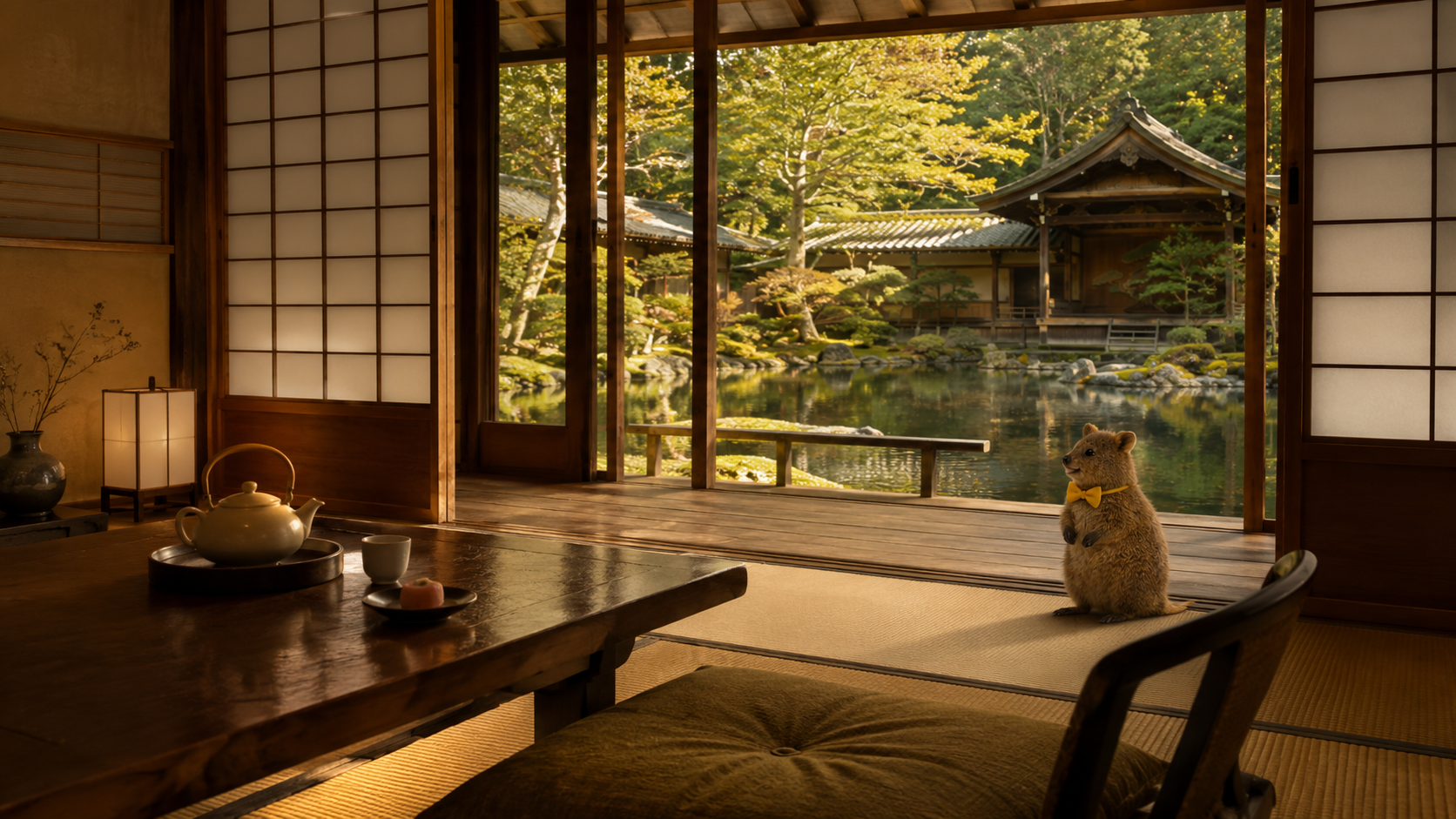
AI-generated editorial image. This image is an editorial interpretation and may not depict the property exactly.
In This Article
- How Asaba's rooms differ by view, bath, bedding, and scale.
- Why the pond and Noh stage view is not automatically the only correct choice.
- How garden-facing rooms can create a more withdrawn stay.
- How to choose by the hours you plan to spend inside the room.
Rooms
At Asaba, the room is not only where the guest sleeps
The official room list at Asaba begins with practical facts: size, outlook, bedding, bath type, and category.
Villa Tenko is listed at 220 m2, while superior rooms sit around 49 to 71 m2. Those numbers matter, but they are only the beginning of the decision.
Some rooms face the pond and Gekkeiden, while others face the garden. Some use queen beds, while others use futon bedding. Baths also vary by room, with koyamaki wooden tubs appearing repeatedly in the official descriptions.
For a traveller choosing Asaba as the destination, these differences affect dinner, bathing, sleep, morning light, and the amount of time that can remain within one private space.
The decision begins with the hours you expect to spend inside.
The Room as Base
The room is where the itinerary begins to slow down
At Asaba, dinner is served in the guest room. Breakfast can also be taken there. These are practical service details, but they change the evening's geography.
After bathing, there is no need to return to a public dining room or search for another place to sit. The table, window, bedding, and bath remain part of the same private sequence.
A room with enough space for sitting quietly after dinner will feel different from one used mainly for sleeping. A room with a bath that suits the body will change how often the guest moves.
Read the room by use: the place for tea, the surface for dinner, the line of sight from the window, and the distance between bathing and sleep.
From the Official Instagram
Pond and Stage
A Gekkeiden view gives the stay a fixed point
Several official room descriptions identify a view of the pond and traditional Noh stage. In those rooms, Gekkeiden becomes part of the day's rhythm instead of a scene visited once.
Afternoon light, the darker surface of the pond after dinner, and the first look outside in the morning all return to the same architectural center.
Rooms including Hagoromo, Moegi, Asagi, Ugetsu, Kocho, and Matsukaze are associated with the Noh stage and pond view in official descriptions or reservation listings. They differ in category, size, bedding, and bath type.
The experience is spatial continuity: the cultural heart of the ryokan remains close while the guest stays seated, eats, bathes, and returns to the window.
From the Official Instagram
Garden Rooms
A garden view creates a quieter register
Garden-facing rooms move attention toward trees, seasonal color, moss, and the quieter margins of the ryokan.
The atmosphere is less ceremonial than the pond and stage. It is closer to the scale of the window, the edge of the tatami, and the pauses between meals.
Villa Tenko is described as a detached villa suite with a garden view and both outdoor stone and indoor koyamaki wooden baths. Hagi, Nadeshiko, Dodan, Fuji, and Yamabuki are also associated with garden views.
A detached villa, suite, deluxe room, and superior room each create a different balance of space, privacy, bath, and bodily ease. The garden category is therefore a question of rhythm as much as scenery.
Bath and Bedding
The room decision also belongs to the body
Bath and bedding shape the physical rhythm of the night. Official descriptions include queen beds in some rooms, futon bedding in others, and room baths that vary by room. Villa Tenko adds an outdoor Towadaishi stone bathtub and an indoor koyamaki wooden bath.
These details affect the order of the evening: sitting after dinner, bathing again before sleep, waking without hurry, or giving older guests and children an easier arrangement.
For some travellers, beds will make the stay easier. For others, futon bedding will feel more connected to the room's Japanese spatial logic. The better choice is the arrangement that lets you settle without noticing the arrangement.
From the Official Instagram
Choosing Pattern
Read the official list as a set of patterns
The room list can be read vertically, from villa suite to suite, deluxe suite, and superior. It can also be read horizontally, by what each room asks the guest to notice.
One pattern privileges the pond and Gekkeiden. Another privileges garden privacy. Another gives priority to bath type, bedding, or the ease of remaining indoors after dinner.
For a couple, a smaller room can be enough if the outlook and bath fit the pace. For a family or longer visit, space and bedding may become the practical center of the reservation.
This is where category becomes useful: not as prestige, but as a way to compare how the evening, sleep, and morning will actually work.
Selection Guide
Which Asaba room choice suits which traveller?
Use this guide as a practical filter after checking the official room and reservation pages.
Choose a pond and Noh stage view if Gekkeiden is central to the trip
For many first-time guests, Hagoromo, Moegi, Asagi, Ugetsu, Kocho, Matsukaze, or another room listed with the pond and stage will make the property's cultural center immediately present.
Choose a garden view if you want the stay to feel more withdrawn
Look first at Villa Tenko, Hagi, Nadeshiko, Dodan, Fuji, Yamabuki, or other garden-facing options when privacy and seasonal color matter more than the central scene.
Let bath and bedding decide when comfort is the priority
Check queen beds, futon bedding, bath type, occupancy, and child conditions before falling in love with a name or category.
The official reservation details should decide the final match.
The right room is the one that keeps you inside the stay
Asaba's room descriptions begin with square meters, outlook, floor, bedding, bath type, and occupancy. Each fact changes how the night can unfold.
A pond and Noh stage outlook keeps the cultural heart close. A garden-facing room can draw the evening toward trees and seasonal color. A detached villa changes the distance from the main building. Beds, futons, indoor baths, open-air baths, and room size all affect how easily the body settles.
The useful question is where your time will gather: beside the window after dinner, around a bath before sleep, on bedding that suits the body, or in a quieter garden-facing corner of the property.
That is how Asaba becomes less like a booking category and more like a night allowed to remain in one place.
The room is not separate from the journey. At Asaba, it is where much of the journey happens.
Wabi-sabi Retreats
Return to the Wabi-sabi Collection
Explore more stays shaped by quiet architecture, natural materials, hot springs, gardens, and slower ways of moving through Japan.
Back to Wabi-sabi