Wabi-sabi Retreats #05
Dining and Practical Decisions Before Choosing Beniya Mukayu
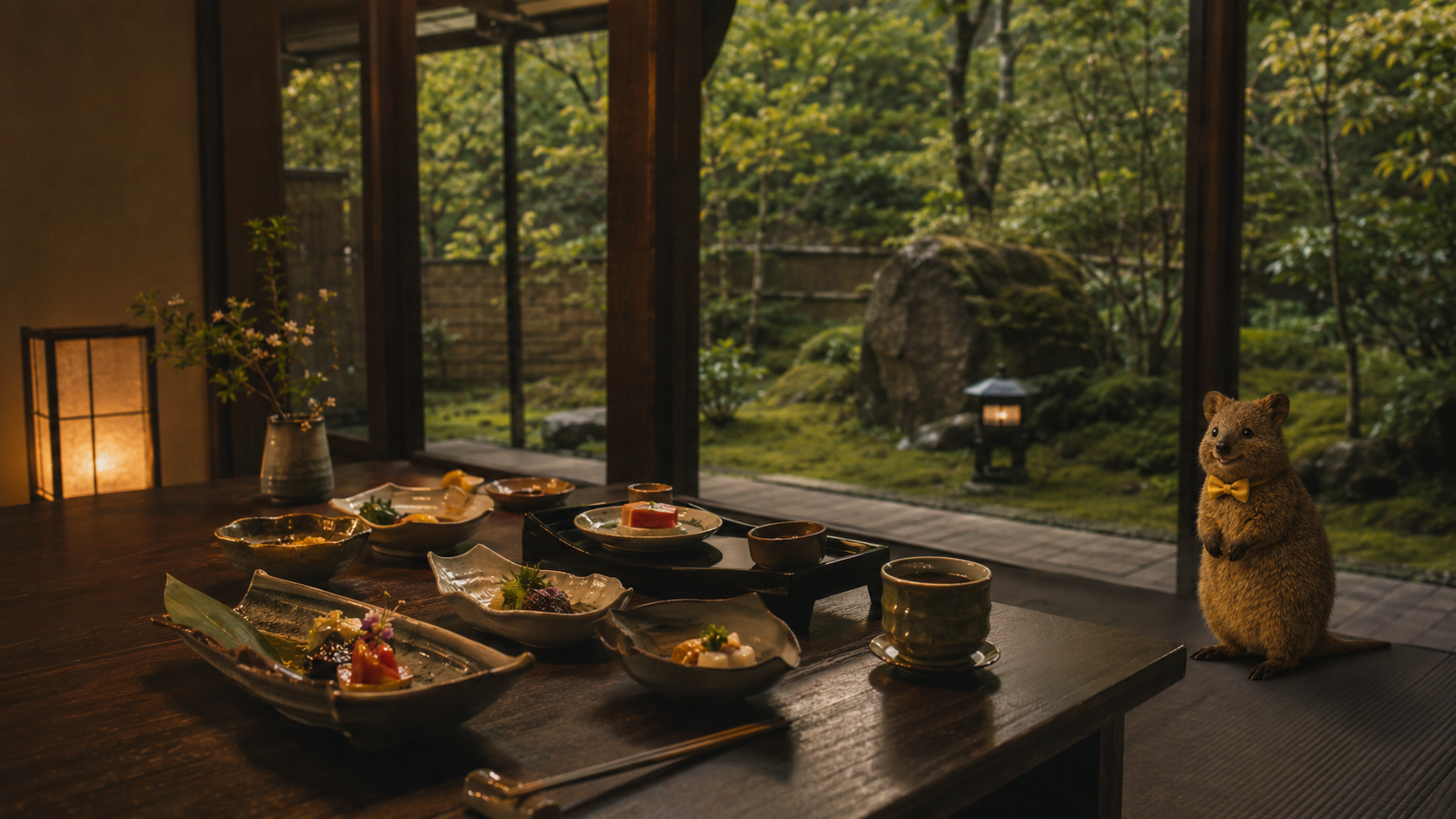
AI-generated editorial image. This image is an editorial interpretation and may not depict the property exactly.
In This Article
- How Kaiseki Horin connects the meal to the Forest Garden and Kaga-Noto seasonality.
- What dinner and breakfast contribute to the stay rhythm.
- Which practical details international travellers should confirm before booking.
- Who Beniya Mukayu suits, and who may need a different style of luxury stay.
Dining and Practical Guide
The final decision is made through meals, access, and the kind of quiet you actually want
By the final article, the question is no longer whether Beniya Mukayu has attractive elements. The series has already covered the rooms, garden, architecture, onsen, and Spa Entei.
The remaining task is practical: understand how dining, access, booking conditions, and guest fit turn those strengths into a real itinerary.
Kaiseki Horin, Kaga and Noto ingredients, Yamashiro Onsen access, private baths, and the 16-room scale all matter because they help the traveller decide whether this ryokan belongs in the trip.
A good final decision is not abstract admiration; it is knowing how the stay will work.
Kaiseki Horin
Dining is strongest when it keeps the garden and region in the same frame
Dinner and breakfast at Beniya Mukayu are served at Kaiseki Horin. The restaurant matters not only because it provides meals, but because it gathers the region, the Forest Garden, and the evening into one practical experience.
Kaga and Noto seasonal ingredients give the meal a local basis. The important editorial point is not to list dishes that may change, but to understand how the meal keeps the stay tied to Ishikawa rather than turning dinner into a generic luxury performance.
For the guest, dining also organizes time. It gives the evening a center after bathing and before sleep, and breakfast gives the morning a way to begin before departure decisions return.
From the Official Instagram
Dinner and Morning
The meal rhythm decides how the night feels
A ryokan stay often becomes memorable through the hours around meals. At Beniya Mukayu, dinner should not be treated as an isolated restaurant reservation. It belongs between the room bath, the garden, and the quieter choices after eating.
The evening works best when the guest does not rush from one experience to the next. Bathe, dress, eat, return slowly, read, use the private bath again, or let the room become quiet before sleep. Dining helps mark those transitions without adding noise.
Breakfast performs a different task. It prepares the guest to leave without making the morning feel abruptly practical. If the trip continues to Kanazawa, Kaga, or another part of Hokuriku, the meal becomes the last calm interval before movement resumes.
From the Official Instagram
Access and Planning
Beniya Mukayu is accessible enough that the journey should not overpower the stay
Beniya Mukayu belongs in Wabi-sabi rather than Faraway because access is part of planning, not the main story. The ryokan is in Yamashiro Onsen, Kaga, Ishikawa, so travellers should plan the final transfer carefully, but the journey does not have to become the dominant memory.
This matters for itinerary design. The property works well when paired with a slower Hokuriku route, a Kanazawa visit, or a stay focused on hot springs and food rather than a packed multi-city schedule.
Arriving too late weakens the stay. The room, private bath, garden, spa, and meal rhythm need time. If the schedule allows only a late check-in and early departure, Beniya Mukayu’s strongest qualities will be compressed.
Fit and Cautions
The right guest wants restraint to be part of the value
Beniya Mukayu is a strong choice for travellers who want privacy, garden-facing rooms, private hot spring bathing, spa time, seasonal dining, and enough unplanned space for those elements to connect.
It is less obvious for travellers who expect luxury to mean a large number of facilities, multiple restaurants, a visible resort atmosphere, or constant movement between activities. The property’s confidence lies in reduction.
Practical caution is also part of the decision. Confirm tattoo policy, child conditions, group suitability, dietary requests, spa reservations, room category details, cancellation terms, and current operating conditions before treating any plan as settled.
From the Official Instagram
Final Booking Judgment
Should Beniya Mukayu be part of your Japan itinerary?
Use this final filter after checking the official room, dining, spa, and access details for your dates.
You want the ryokan itself to be the main plan
Beniya Mukayu works best when the room, garden, onsen, spa, and meals are given enough time to become the reason for staying.
Private bathing and quiet dining matter more than many facilities
The property’s strongest luxury is concentrated: a small room count, garden-facing rooms, private open-air baths, Spa Entei, and Kaiseki Horin.
You want a resort with constant options
Travellers who measure value by the number of restaurants, activities, lounges, or public facilities may prefer a different style of hotel.
The booking decision should follow the kind of time you want, not only the beauty of the property.
The final reason to choose Beniya Mukayu
Beniya Mukayu is not the right ryokan for every luxury traveller, which is part of its usefulness as a Japan Retreats recommendation.
It is strongest for travellers who understand that a private bath, a garden-facing room, seasonal kaiseki, a spa rooted in Yamashiro Onsen, and a small number of rooms can be enough when the itinerary leaves them space to work.
Across the series, the property’s value has not been abundance. It has been concentration: forest, water, healing space, food, and privacy arranged so that the traveller can stop adding more to the day.
Choose Beniya Mukayu when the final luxury you want from the itinerary is not more access to Japan, but a clearer way to spend time inside one place.
Wabi-sabi Retreats
Return to the Wabi-sabi Collection
Explore more stays shaped by quiet architecture, natural materials, hot springs, gardens, and slower ways of moving through Japan.
Back to Wabi-sabi