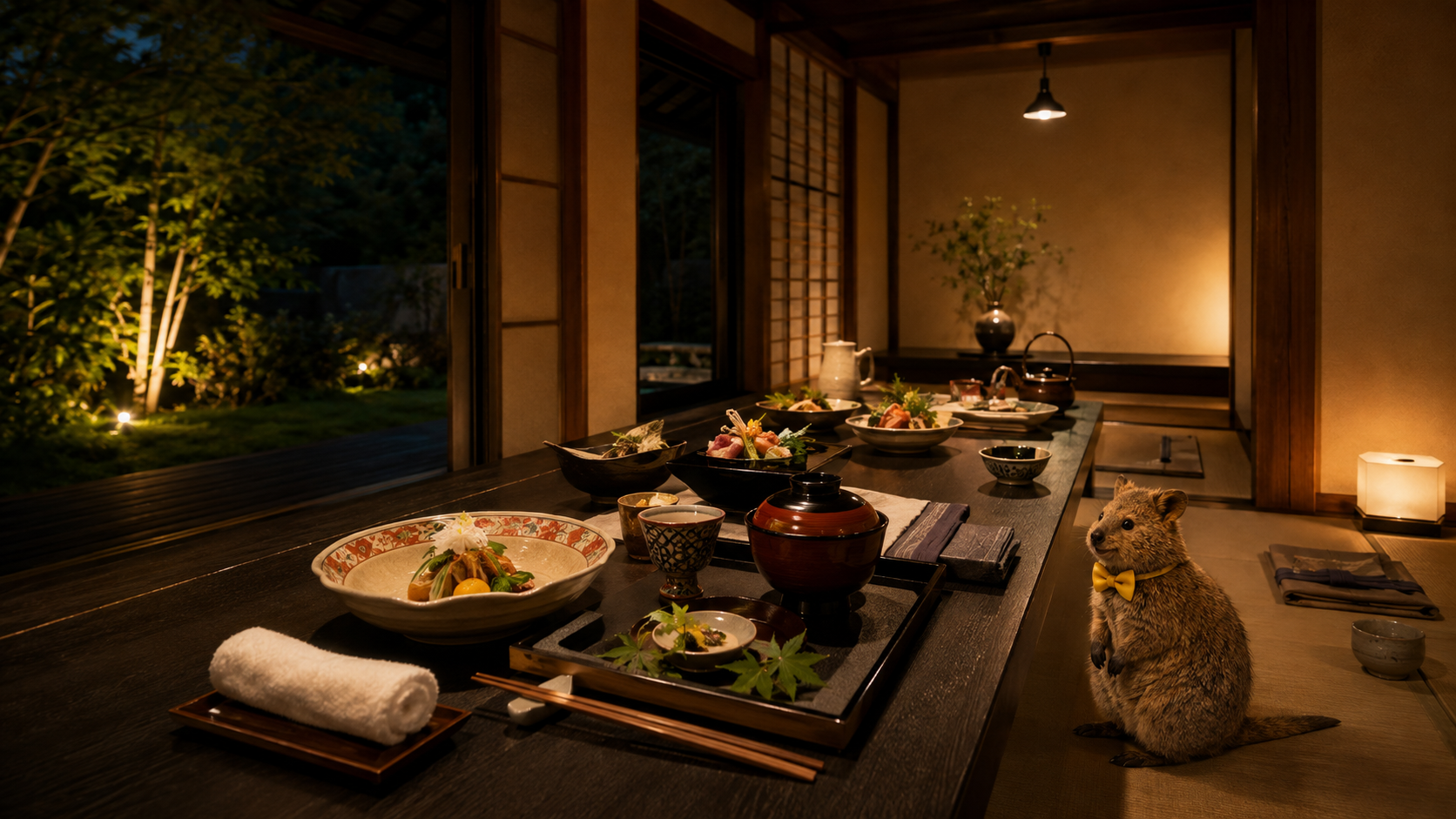
Gora Kadan Hakoneの入浴後から懐石料理が始まるまでの夕暮れの時間を表現した編集イメージ

Wabi-sabi Retreats · Gora Kadan Hakone · #05

Begin with Dinner, and the Shape of a Night at Gora Kadan Becomes Clear

A practical guide to how kaiseki dining, bathing, arrival time, and the following morning determine the rhythm of a stay.

Kaiseki Dining Rhythm Onsen Evening Practical Guide
Check Availability Official Site

Gora Kadan Hakone · Dining & Practical Guide

Dinner works best when it determines the hours around it.

When planning a stay at Gora Kadan, the first question is not where to go the following morning. It is what state you want to be in when you return to the ryokan before dinner.

Hakone makes it possible to combine museums, Lake Ashi, shrines, and the ropeway within a single day. Yet arriving at Gora Kadan after moving continuously until late afternoon can turn the room, the bath, and dinner into a sequence of appointments to be completed.

Dinner works better here when it is not treated as the final item on the itinerary. It should determine the shape of the hours around it.

At Gora Kadan, dinner is not simply an elaborate meal attached to the stay. It is the point that ends the sightseeing day and brings bathing, kaiseki, night, and the following morning into one continuous sequence.

Ending the Sightseeing Day

Dinner Decides When Sightseeing Should End

Gora Kadan offers stays that include dinner and breakfast. Dinner is served as a seasonal kaiseki meal, with courses adjusted not only to the season but also from month to month.

The significance lies less in the number of dishes or the prestige of individual ingredients than in the structure of the meal itself. Kaiseki unfolds in a set sequence. Once it begins, the day that had been governed by trains, roads, and opening hours moves at a different pace.

One course is cleared before the next arrives. There is no need to choose another restaurant, check the route back, or decide what to do afterward. By allowing the meal to determine the evening, the center of the journey shifts from moving through Hakone to remaining inside the ryokan.

For that reason, Gora Kadan is not well matched with an arrival day packed with distant stops until late afternoon. To make dinner part of the stay rather than an obligation at the end of it, it is better to finish traveling early enough to allow time for bathing, changing, and sitting in the room before the meal begins.

From the Official Instagram

View this post on Instagram

Before and After the Meal

Bathing Before or After Dinner Changes the Night

Bathing before dinner creates a clear break from the outside journey. Clothes worn during the day are set aside, body temperature changes, and the transition to the dining table no longer feels immediate.

When there is time to rest in the room after bathing, arrival and dinner become part of the same uninterrupted sequence.

Bathing again after dinner gives the evening a different ending. Rather than leaving the property for a bar or another destination, guests return to the room or the communal baths. The bath is no longer simply preparation for dinner. It becomes the passage from the meal into the night.

A room with its own bath removes the need to dress and walk through the property again. A visit to the communal baths, by contrast, requires another passage through the corridors and garden after dark.

Neither choice is inherently better. The question is whether the evening should close within the room, or whether one final movement through the architecture should remain part of the night.

The Pace of Kaiseki

Kaiseki Should Not Be Reduced to a Cultural Experience

For international travelers, kaiseki may appear to be one of the defining forms of Japanese dining. At Gora Kadan, however, its value is not limited to the opportunity to experience traditional cuisine.

A kaiseki meal does not present one ingredient in abundance. It develops through changes in temperature, texture, cooking method, vessel, and season. Guests pause between courses, set down their chopsticks, pick up a bowl, resume a conversation, and wait for the next dish.

These repeated pauses make dinner deliberately inefficient.

Travelers who prefer to eat quickly and continue with the evening may find the sequence long. Those willing to let the meal become the evening itself are less likely to feel that something is missing outside the property.

The more useful question is therefore not what one eats in Hakone, but how slowly one is prepared to move between late afternoon and sleep.

From the Official Instagram

View this post on Instagram

The Following Morning

Do Not Place Breakfast Beneath the Next Appointment

Ryokan breakfast is often treated as fuel before departure. After an evening shaped by kaiseki and repeated bathing, rushing through breakfast can make the end of the stay feel abruptly cut off.

The morning works better when packing does not begin immediately after waking. A bath can come first, followed by breakfast, with time left afterward to return to the room.

As the light outside the window changes, luggage can be arranged without turning the entire morning into a countdown. A gap between breakfast and departure prevents the ryokan from becoming a place that must be left as soon as the table is cleared.

Placing a distant appointment immediately after check-out allows transport schedules to take control of the morning. When Gora Kadan is treated as the center of the journey, the first destination of the day should be reduced, delayed, or kept close enough that departure does not begin before breakfast has properly ended.

Length of Stay

One Night Is Sufficient, but Not Complete

A one-night stay can still contain the essential sequence: arrival, bathing, dinner, another bath, and breakfast. To make that sequence work, sightseeing on the first day must end early.

Two nights create a different relationship with the property. The first can be used to understand the architecture, the movement between spaces, and the rhythm of the meals. On the second day, guests can leave briefly and return without having to relearn the pace of the stay.

Dinner then becomes more than a single event. It becomes the point around which the day outside is organized.

The decision between one night and two should not be based simply on how many facilities one hopes to use. It depends on whether the priority is efficient travel through Hakone or time spent returning to the ryokan.

One night suits an itinerary centered on the region’s main sights. Two nights begin to make sense when the hours after returning are part of the journey rather than what remains after it.

From the Official Instagram

View this post on Instagram

Who This Stay Suits

This Stay Suits Travelers Willing to Reduce the Day for Dinner

Gora Kadan is less suited to travelers who want to continue sightseeing until evening and use the ryokan mainly for dinner and sleep. It may also feel restrictive to those who dislike fixed dining times or prefer to choose among several restaurants at night.

It is better suited to guests who are willing to end the afternoon early, bathe before dinner, and allow the meal to occupy the center of the evening.

The appeal lies less in rare ingredients or ceremonial formality than in the progression of courses, the absence of another destination afterward, and the possibility of beginning the next morning without haste.

The meal also asks something of the people sharing it. Dinner here is not a brief, individual task. It brings two people or a family into the same tempo for an extended part of the evening.

Practical Notes

What to Confirm Before Booking

The dining location should be confirmed in advance, as arrangements may vary by room type or accommodation plan. Whether dinner is served in the room, in a private dining space, or elsewhere on the property changes how much movement remains in the evening.

Guests with food allergies, religious dietary requirements, or other restrictions should confirm what can be accommodated and how far in advance notice is required. It is better to provide specific ingredient names and cooking restrictions rather than rely on broad labels.

Arrival time should be planned not only around the latest dinner seating, but also around the time needed to bathe, change, and settle into the room. The aim is not merely to reach the ryokan before dinner. It is to arrive early enough that dinner does not need to be rushed.

Final Take

Choose Gora Kadan When Dinner Is Not Just Another Plan

At Gora Kadan, the kaiseki meal does not remain separate from the rest of the stay.

Guests arrive, bathe, stop moving at the table, return to the room or the baths, sleep, and remain within the property until breakfast. That continuity gives a single night its shape.

Gora Kadan is not chosen only for the refinement of its dinner. It is chosen by travelers willing to let dinner bring sightseeing to an end, and to place the rest of the night and the following morning in the hands of the ryokan.

Series Complete

The Gora Kadan Series Ends Here

This article completes our five-part series on Gora Kadan Hakone.

Across the series, we have considered the ryokan not as a collection of rooms, baths, meals, and historic buildings, but as a stay shaped by distance, movement, water, and time. From choosing a room to walking through the property, returning to the bath, and allowing dinner to bring the sightseeing day to an end, each part has examined how the ryokan gradually changes the pace of the guest.

The series ends here, but the complete collection remains available for readers planning a stay or returning to compare each part of the experience.

Wabi-sabi Retreats

Return to the Wabi-sabi Collection

Explore more stays shaped by quiet architecture, natural materials, hot springs, gardens, and slower ways of moving through Japan.

Back to Wabi-sabi